somethingMany people have turned to Black Seed Oil for its health benefits. They have discovered known by the ancients and more recently people from the Middle East: the oil has antiviral, antibacterial, antioxidant, and numerous other beneficial properties. [1]
While Nigella sativa seeds, from which we derive Black Seed Oil, are commonly used in Middle Eastern and North African cooking, it is not common to do so in Western countries. Instead, people in these regions turn to the use of Black Seed Oil to gain its myriad benefits. Do note, however, that Middle Eastern and North African populations have also used the oil in both cooking and as a natural medication.
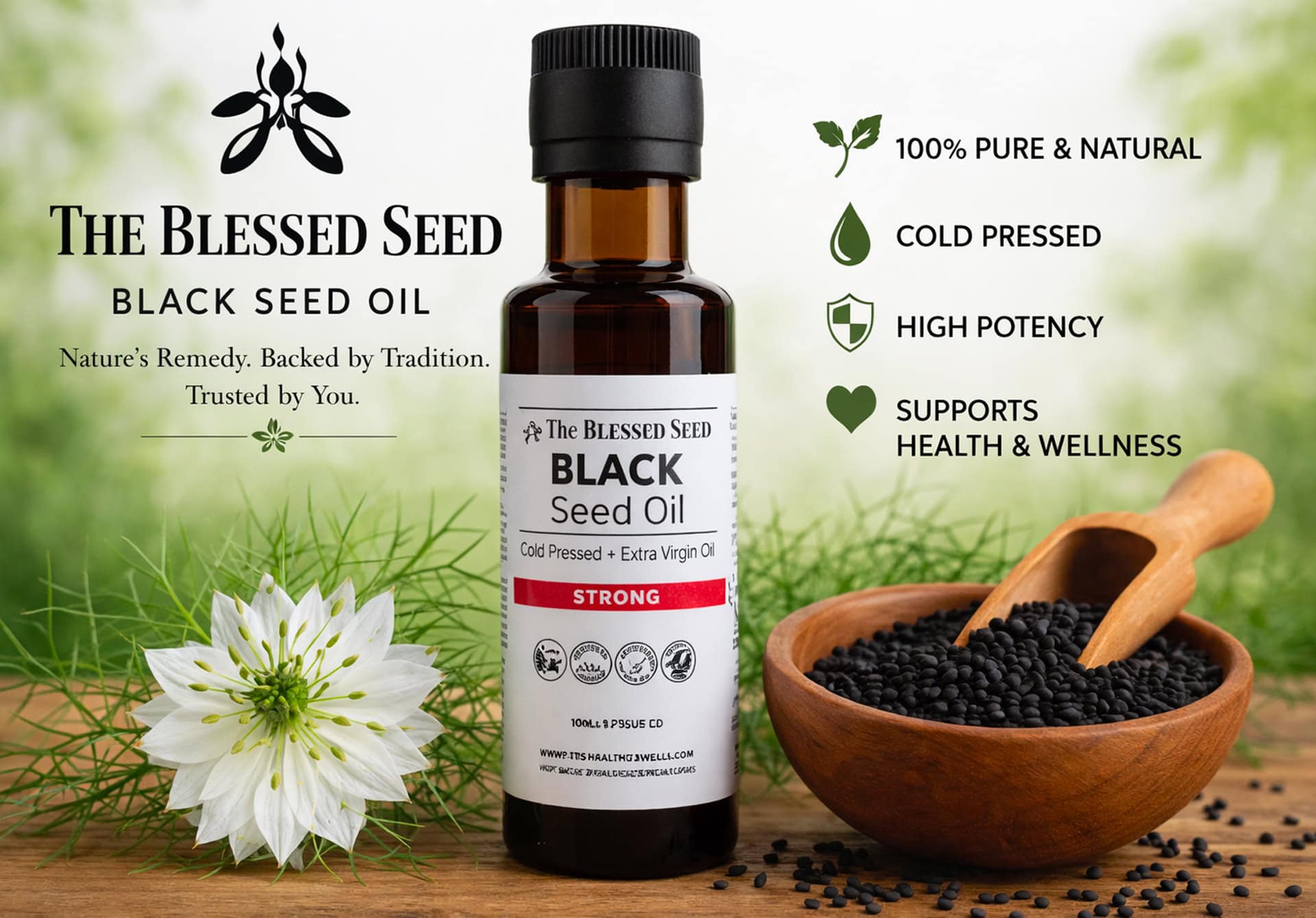
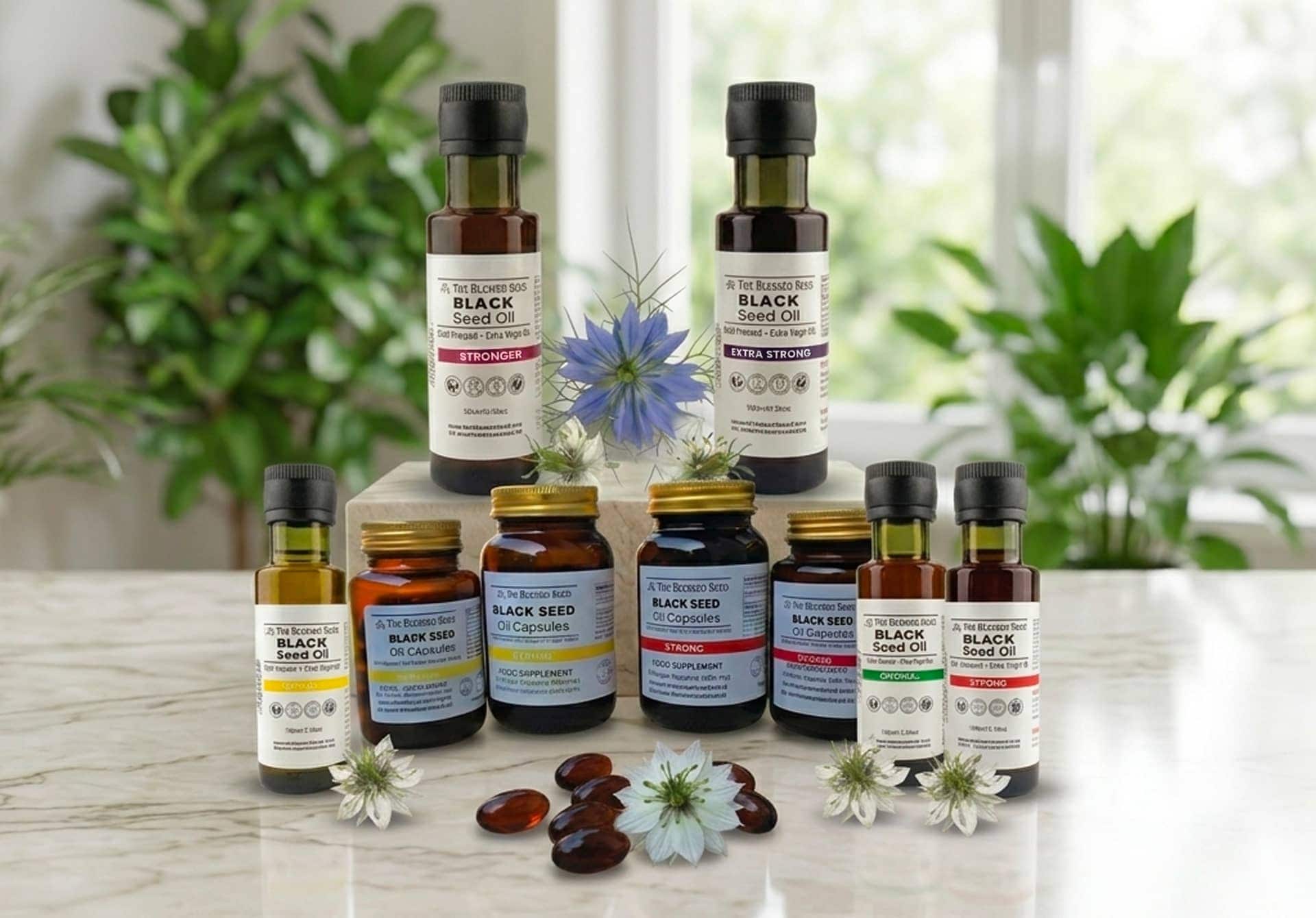
These days, we can purchase three forms of Black Seed Oil. These are the regular Black Seed Oil, capsules containing the oil, and high-potency liquids. The question when purchasing your oil is the form in which you prefer to use it.
We will investigate these three options and look at the benefits and disadvantages of each.
Black Seed Oil
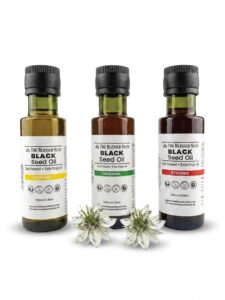
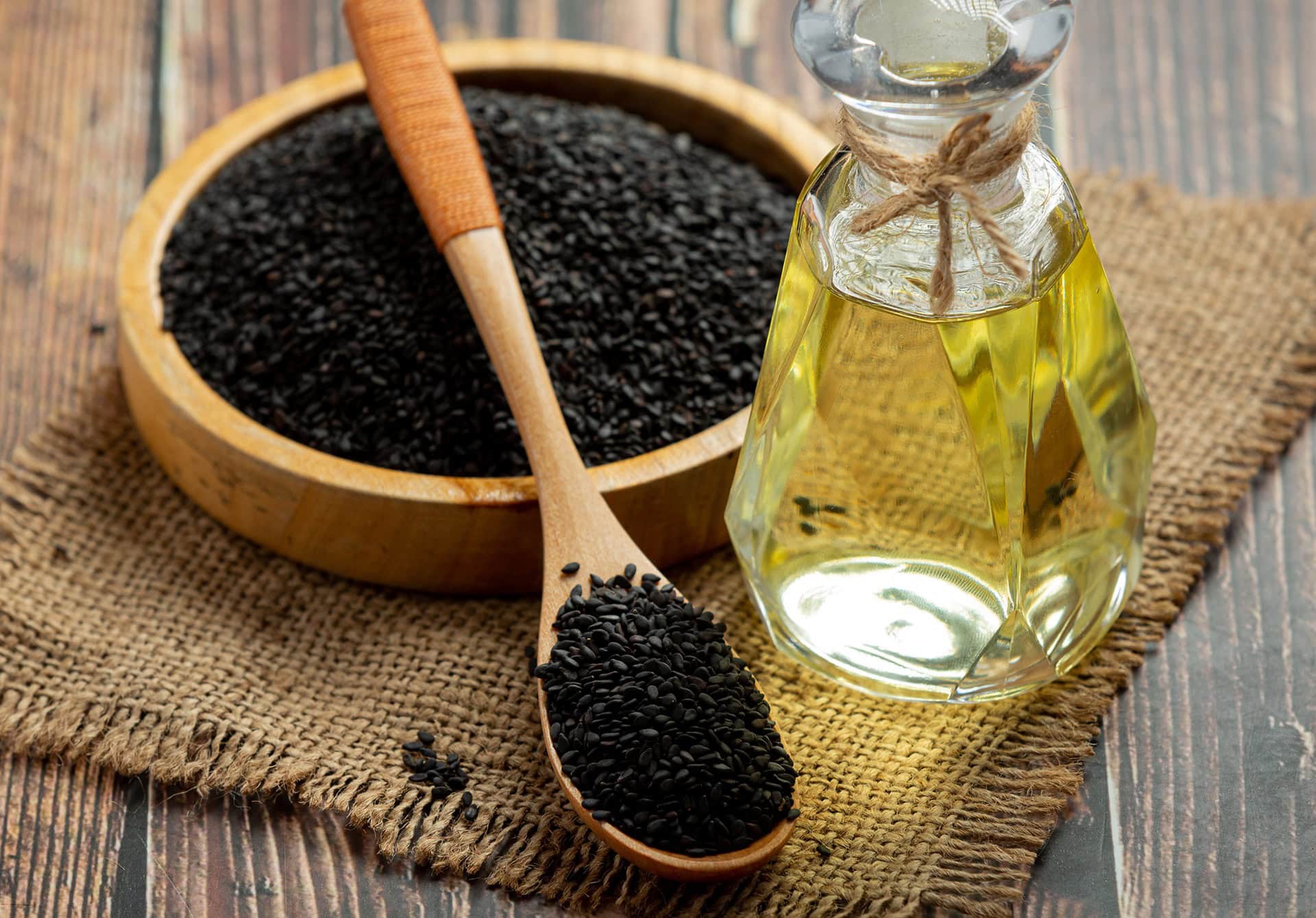
When talking about Black Seed Oil, we usually refer to those oils with a maximum potency of 3%. This is usually the potency at which most people start on their Black Seed Oil journey. You can take this oil orally, but also apply it topically.
Black Seed Oil has long been used to address various skin health issues. Examples include wounds, burns, acne, pigmentation, and skin inflammation. [2]
When taken orally, the beneficial compounds in the oil, like thymoquinone, quickly move into the body via your intestinal lymphatic system. These compounds then move into your cells via the cell membrane, where they conduct their numerous beneficial activities that promote your overall well-being.
Although all the different compounds in Black Seed Oil have amazing health benefits, thymoquinone is the one that many studies focus on. So far, thymoquinone is known to help manage a range of health issues. These include, amongst many others, asthma, fever, flu, diabetes, high blood pressure, headaches, cancer, and certain liver issues. [3]
Many people find the taste of Black Seed Oil unpalatable, however. The oil has a peppery, bitter, earthy taste. You can mask this by adding it to your food or even in smoothies.
Black Seed Oil Capsules
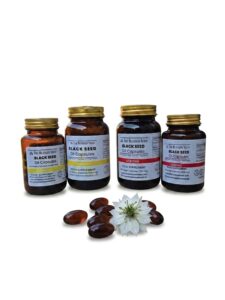
You can purchase Black Seed Oil in a capsule form. The softgel capsule, made from gelatine or vegetarian sources, encloses the oil in an easy-to-swallow shell. [4] The softgel capsule completely masks the taste of the oil. It is also a travel-friendly option as you can take only the number of capsules you need with you for your journey. Furthermore, people who find it difficult to tolerate the taste of the oil find this an easier option to take the oil.
It would, however, take a little longer for your body to absorb the beneficial compounds in the oil. This is because your gastric juices need to first break down the capsule shell before the oil is released. The capsule form of Black Seed Oil is also more expensive than a regular bottle of the oil.
High-Potency Liquids
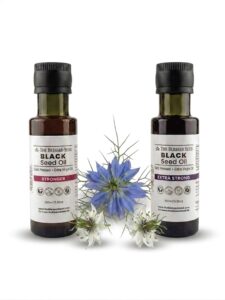
When talking about high-potency liquids when referring to Black Seed Oil, it means talking about Black Seed Oil with higher concentrations of the active compounds like thymoquinone. In effect, it means you could use much less of the high-potency liquid to gain the same beneficial effects of the regular oil. In other words, you could take a lower daily dosage for the same effect.
You could also switch to this type of oil after using the regular Black Seed Oil for a time, as your body would steadily adjust itself to a higher potency. Do remember to always increase dosage gradually to allow your body to become accustomed to it.
Opting for a higher-potency liquid after a while can also mean that your body will gain the maximum amount of metabolic and immune support without having to ingest increasing amounts of the oil itself, because the oil has a higher potency than most bottles of regular Black Seed Oil.
Choosing The Correct Option For You
When choosing between Black Seed Oil vs. capsules vs high potency oils, it really is a matter of personal choice. All three of these options can suit you depending on your personal preferences.
The original regular Black Seed Oil is the one known by most people. It is versatile. You can use the oil topically, ingest it as is, or add it to your food and smoothies. You can even add it to your favourite cup of morning coffee as it imbues the coffee with a slight peppery taste.
Black Seed Oil in capsule form may prove more convenient for others. The softgel capsule casing makes it easier for many people to swallow the oil as it masks the oil’s taste. It may also prove a more convenient option for ingesting the oil for frequent travellers.
Lastly, when taken in the form of a high-potency liquid, you get the full benefits of Black Seed Oil but at a lower dosage. This form of the oil is also a great option for those who want to increase their dosage without having to take everincreasing spoonfuls of the oil. Here, a little goes a long way while providing excellent benefits.
What To Consider When Purchasing Black Seed Oil
Whether you opt to purchase Black Seed Oil, the capsules, or the high-potency oil, do take note of the following considerations:
- When purchasing a liquid product, make sure that it is sold in a dark bottle, as light exposure can degrade the oil.
- Ensure the packaging is labelled as organic
- Check whether the product contains any solvents – you do not want these in your oil
- Do not buy a product with an extremely low thymoquinone concentration
- When purchasing a liquid product, make sure that it is sold in a dark bottle, as light exposure can degrade the oil.
In Closing
People have known of the amazing properties of the seeds of the Nigella sativa plant for centuries. The Prophet Mohammed even said of it that: “There is healing in black cumin (Nigella sativa) for all diseases except death.” Nigella sativa seeds and the oil derived from them have also long been a stalwart in traditional medicine and Ayurvedic healing. And these days, the oil derived from these seeds has increasingly become a staple in many home medicine cabinets.
References:
- Ahmad A, Husain A, Mujeeb M, Khan SA, Najmi AK, Siddique NA, Damanhouri ZA, Anwar F. A review on therapeutic potential of Nigella sativa: A miracle herb. Asian Pac J Trop Biomed. 2013 May;3(5):337-52. doi: 10.1016/S2221- 1691(13)60075-1. PMID: 23646296; PMCID: PMC3642442.
- Eid AM, Elmarzugi NA, Abu Ayyash LM, Sawafta MN, Daana HI. A Review on the Cosmeceutical and External Applications of Nigella sativa. J Trop Med. 2017;2017:7092514. doi: 10.1155/2017/7092514. Epub 2017 Nov 22. PMID: 29358959; PMCID: PMC5735686.
- Khader M, Eckl PM. Thymoquinone: an emerging natural drug with a wide range of medical applications. Iran J Basic Med Sci. 2014 Dec;17(12):950-7. PMID: 25859298; PMCID: PMC4387230.
- Jones WJ 3rd, Francis JJ. Softgels: consumer perceptions and market impact relative to other oral dosage forms. Adv Ther. 2000 Sep-Oct;17(5):213-21. doi: 10.1007/BF02853160. PMID: 11186141.